
The Healing Library
A Sacred Collection: Wisdom for the Unmasking and the Mending
This library is a purely personal offering from my heart to yours. These resources are more than just a list of books; they represent the map of my own mending. I share these works as a fellow traveler—not for profit or partnership—but because they provided the scaffolding I needed to rebuild my life after the facade crumbled.
Whether you are unmasking the truth of your past, setting boundaries for your future, or deconstructing a faith that was used to keep you small—I hope these pages help you realize that you were never the problem, and you are not alone.
With hope for your healing,
Kelly

What Happened To You?
Understanding Trauma & The Path to Recovery
The Insight
The fundamental shift in healing comes from changing the internal question from "What is wrong with you?" to "What happened to you?" This perspective recognizes that our most challenging "flaws"—anxiety, lashing out, or shutting down—are actually brilliant adaptations designed by the brain to help us survive past trauma. By understanding the hierarchy of the brain, we see that we cannot reason our way out of a trauma response; we must first address the rhythmic and sensory needs of the lower brain to find true stability.
The Mending
This book was a mirror that helped me pivot from the agonizing question, 'What’s wrong with me?' to the transformative one, 'What happened to me?'
For decades, I carried the agonizing belief that I was fundamentally flawed—a 'black sheep' who simply couldn't measure up. Reading this book was like looking into a mirror that finally told the truth. It helped me trace the tremors of my adult anxiety back to my very first cries as a colicky infant—cries that went unconsoled and seared into my nascent being the terrifying belief that I was not valuable or worthy of affection.
Dr. Perry’s insights revealed that the 'external regulation' I missed in those early years wasn't a personal failure, but a biological theft that left my nervous system chronically out of balance. This book gave me the language to understand that my behaviors were adaptive responses to hardships I survived, not inherent flaws. It was the first step in coming home to myself, replacing a lifetime of shame with a quiet, powerful testament to my own resilience.

Trauma & Recovery
Understanding Trauma & The Path to Recovery
The Insight
A seminal work that connects the psychology of individual trauma (like domestic or family abuse) to wider social contexts. Herman outlines the three essential stages of recovery: establishing safety, remembrance and mourning, and reconnection with ordinary life.
The Mending
For a long time, I felt like my healing was stalling because I was trying to 'move on' before I felt safe. I was pressured to forgive and forget before I had even processed the reality of the harm.
Judith Herman gave me a map for my journey. She taught me that the first and most sacred step of recovery is Safety. I realized that I couldn't heal while I was still standing in the line of fire. This book validated my need to create distance and protected space. It taught me that telling my story—the 'remembrance and mourning'—wasn't an act of betrayal against my family, but a necessary act of reclaiming my own history. Herman helped me see that recovery isn't a straight line, but a process of slowly rebuilding a self that the façade tried to erase.

What My Bones Know
Understanding Trauma & The Path to Recovery
The Insight
A powerful, journalistic, and deeply moving memoir about living with C-PTSD. Foo explores how a childhood of "high-functioning" excellence can hide a world of hidden abuse, and she documents her scientific and emotional search for a way to live with a brain that has been rewired by trauma.
The Mending
I was a master of performance. I was successful, organized, and 'fine'—until I wasn't. Like Stephanie Foo, I realized that my body was keeping secrets that my mind was trying to ignore. I didn't just have 'stress'; I had a history written into my very bones.
This book was a mirror for me. It gave me permission to be angry, to be messy, and to stop pretending that my 'high-functioning' life meant I wasn't hurting. Stephanie’s journey taught me that C-PTSD isn't a life sentence of brokenness; it’s a blueprint of how we survived. It showed me that healing isn't about 'getting over it,' but about learning to mother ourselves and creating a life where our nervous systems can finally feel at home. It’s the book that helped me realize that even if my past was a lie, my future could be built on the truth of what my bones already knew.

The Child In You
Understanding Trauma & The Path to Recovery
The Insight
A practical guide to "inner child" work that distinguishes between the Shadow Child—the part of us that carries negative beliefs from our upbringing (like "I am not enough")—and the Sun Child, the part that represents our innate vitality and joy. Stahl provides exercises to help readers recognize their "protection strategies" and shift into a state of self-acceptance.
The Mending
Living behind the 'Holy Facade' meant my 'Shadow Child' was constantly running the show. I was trapped in a cycle of protection—performing, pleasing, and perfecting—just to feel a sliver of safety. I didn't realize that my 'good girl' mask was actually a shield my inner child had built to survive a world where love was conditional.
Stephanie Stahl helped me identify the 'birth beliefs' I was handed by those who used faith to control me. This book gave me the tools to take the hand of my Shadow Child and tell her, 'You don't have to perform anymore. We are safe now.' It allowed me to find my Sun Child again—the girl who loved to create and dream before she was told her only value was in her image. It taught me that self-acceptance isn't a sin; it’s the foundation of the freedom I have today.

Maybe You Should Talk To Someone
Understanding Trauma & The Path to Recovery
The Insight
The fundamental shift in healing comes from recognizing that the stories we tell ourselves about our lives can become the very cages that trap us. In this book, therapist Lori Gottlieb balances her clinical insights with patients alongside her own personal journey in therapy, revealing that we are often unreliable narrators of our own histories. We frequently construct defense mechanisms—like emotional numbing, defensive anger, or intellectualized deflection—to avoid confronting the painful blind spots and deep-seated grief we carry. By pulling back the curtain on the therapeutic process, Gottlieb shows that true emotional stability requires breaking through these protective scripts, accurately identifying our hidden wounds, and accepting the reality of what cannot be changed. Ultimate transformation happens when we transition from being passive characters in a narrative of survival to the active, truth-driven editors of our own lives.
The Mending
This book was a mirror that helped me pivot from the agonizing role of a passive participant in a family's delusions to the definitive editor of my own life story.
For decades, I carried the exhausting belief that my worth was strictly tied to my productivity, accolades, and ability to act as a flawless emotional shock absorber. Reading this book was like looking into a mirror that finally exposed the high cost of my guarded, walled-off heart. It helped me connect the dots between my adult anxiety attacks and the psychological profile I completed during three months of company-sponsored counseling, which unmasked a woman who was highly competent and smiling on the outside, but completely unapproachable and emotionally frozen on the inside.
Gottlieb’s insights revealed that my intense drive to be the perfect manager, the perfect mother, and the self-erasing wife who spent twenty years validating a toxic marriage was not a personal defect, but an adaptive response to a system where attention was entirely conditional. This book gave me the language to confront the deep-seated grief of my attachment history—from an infant colic that was met with maternal abandonment to a childhood kitchen courtroom where my voice did not exist. It was the catalyst for dismantling my survival fortress, allowing me to stop apologizing for my reality, fire the false representatives of my past, and confidently step into the light of my own sacred worth.

Recovering From Emotionally Immature Parents
Understanding Trauma & The Path to Recovery
The Insight
The fundamental shift in healing comes from pulling back the illusion of parental maturity and evaluating our caregivers through the clear, clinical lens of objective data. In this definitive guide, psychotherapist Lindsay Gibson outlines how emotionally immature parents view their children not as independent individuals, but as transactional extensions of their own fragile egos. These caregivers default to rigid role enforcement, emotional invalidation, and coercive guilt whenever their authority or carefully curated public image is questioned. Gibson shows that healing does not require forcing an unchangeable parent to finally understand your pain; rather, it requires a complete shift in internal strategy. True relational stability begins when a survivor steps out of the exhausting role of the family "fixer," implements unyielding behavioral boundaries, and actively detaches from the toxic scripts of the past to claim their own emotional autonomy.
The Mending
This book was a mirror that helped me pivot from the agonizing belief that I was a difficult, unlovable child to the liberating reality that I was simply raised by profoundly underdeveloped people.
For over fifty years, I carried the crushing weight of being labeled the family "black sheep," internalizing a negative core ledger that told me my basic human needs were nothing but a nuisance. Reading Gibson's work was like looking into a clinical blueprint that completely unmasked the matriarchal dictatorship governing my history. It allowed me to trace my deep-seated anxiety and adults panic attacks back to their exact relational origins: an infancy where my colicky wails were met with maternal freezing and emotional abandonment, and a childhood where my mother maintained a meticulous ledger of my alleged "wrongs" to ensure my total compliance.
Gibson’s frameworks exposed the twisted systemic logic behind the "Golden Child" dynamic, helping me realize why my sister, Donna, operated as a complete extension of our mother's insatiable need for validation and control. The book gave me the vocabulary to understand that my sister's furious outbursts, manipulative usage of weaponized scripture, and defensive "word salad" weren't signs of genuine connection, but a standard behavioral response to losing control over me when I finally refused to pretend. This text was the ultimate confirmation that my quiet rebellion—from self-funding my own education to decisively withholding a birthday invitation from my mother for my own peace—was not an act of malice, but a courageous, biologically imperative decoupling from a legacy of emotional abuse.
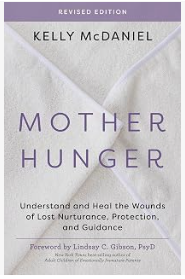
Mother Hunger
Understanding Trauma & The Path to Recovery
The Insight
In Mother Hunger, Kelly McDaniel explores the profound, persistent ache that adults—particularly daughters—carry when they grow up without the essential developmental pillars every child requires from a maternal figure: nurturing, protection, and guidance. Grounded in attachment theory, McDaniel explains how an early deprivation of emotional attunement and safety leaves a deep somatic and psychological imprint. When a mother is emotionally absent, critical, or incapable of protecting her child from terror and chaos, the developing nervous system adapts by building an impenetrable fortress around the heart. Deprived of the external regulation needed to soothe distress, adults with Mother Hunger often struggle with chronic hypervigilance, insecure attachment styles, self-blame, and a desperate, unconscious compulsion to seek out familiar, exploitative dynamics that mimic their earliest relational wounds. Healing begins by naming this structural injury rather than mislabeling it as a personal flaw, allowing the survivor to unfreeze suppressed grief and cultivate a nurturing inner sanctuary.
The Mending
Reading McDaniel’s work feels like shining a glaring, compassionate light into the darkest corners of my own origins. From my earliest days of colicky infancy, marked by my mother's frozen abandonment and emotional absence, I was imprinted with a devastating foundational message: I am not valuable, I am not protected, and I am entirely on my own. Because my mother offered conditional approval and demanded performance while leaving me undefended against domestic instability and terror, I encased my heart in stone, becoming an over-functioning, fiercely independent child who learned that love had to be painfully earned through utility and service. In the pages of Holy Facade, I trace how this profound maternal deprivation directly paved the way for my decades-long entrapment in faith-based narcissistic abuse. I spent a lifetime desperately seeking outside of myself the nurturing and validation I never received at home, mistaking control for safety and emotional starvation for love. Recognizing Mother Hunger has finally liberated me from the false narrative that I was somehow inherently broken or to blame. By tending to my wounded inner child and learning to self-soothe with genuine compassion rather than performance, I am replacing inherited shame with enduring resilience, reclaiming my voice, and building a life rooted in authentic safety and unshakeable self-worth.
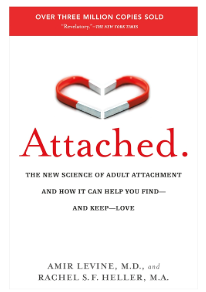
Attached.
Understanding Trauma & The Path to Recovery
The Insight
In Attached, Amir Levine and Rachel S.F. Heller examine adult attachment styles—anxious, avoidant, and secure—and explain how our early relational blueprints dictate our behavior in romantic partnerships. The authors highlight how individuals with an anxious attachment style often experience intense fears of abandonment, hyper-activate when sensing emotional distance, and rely on protest behaviors or urgent attempts to secure closeness to calm their nervous systems. Conversely, those with an avoidant attachment style use distancing strategies to maintain independence and manage vulnerability. Levine and Heller emphasize that true relational health requires recognizing these innate wiring patterns, moving past shame, and developing effective communication to build secure bonds with partners who are emotionally available and responsive.
The Mending
My journey through decades of feeling invisible and abandoned deeply mirrored the anxious attachment patterns described in Attached. Surviving early infancy neglect left me with a profound, internal conviction that I was unlovable and fundamentally alone, making my adult marriage a frantic, exhausting mission to secure safety and prove my worth. I continually engaged in protest behaviors—over-adapting, suppressing my own needs, and enduring deep emotional distress—just to maintain a fragile illusion of connection with a partner who was emotionally unavailable. Recognizing these behaviors through Attached allowed me to replace the heavy burden of self-blame with deep compassion. I understand now that my hyper-vigilance and desperate striving were not personal failures, but adaptive survival mechanisms forged in childhood. Breaking free from that cycle has allowed me to rewrite my relational blueprint, transforming old patterns into enduring resilience and reclaiming a grounded, peaceful sense of self.

Is It Me?
Unmasking Faith-Based Narcissism & Healing from Abuse
The Insight
The core realization is that the confusion and self-doubt you feel are not signs of your own instability, but the intended result of a systematic erasure of your reality. Natalie Hoffman illustrates that in high-control religious or domestic environments, your "gut instinct" is often framed as rebellion or lack of faith. The "insight" is reclaiming your internal compass: understanding that the "fog" you live in is created by someone else’s need for power. When you stop asking "Is it me?" and start seeing the patterns of emotional and spiritual coercion, the burden of "fixing" the relationship shifts off your shoulders and back onto the person actually causing the harm.
The Mending
If the study of boundaries gave me the tools to protect my space, this book gave me the courage to trust my own eyes again. For decades, I was told that my discomfort with the 'holy facade' was a spiritual failing, leading me to constantly interrogate my own heart while the red flags in front of me were ignored.
Natalie Hoffman provided the validation I needed to deconstruct the "weaponized suffering" I had been taught to endure. This book was my permission to stop prioritizing the comfort of my oppressors over my own safety and sanity. It helped me realize that a "relational injury requires a relational cure," and that staying in an environment that actively harms you is not an act of holiness—it’s an act of self-destruction. This was the moment I stopped looking for my reflection in a broken mirror and started building a sanctuary based on my own truth.

It’s Not You
Unmasking Faith-Based Narcissism & Healing from Abuse
The Insight
The core realization is that the dysfunction in the relationship is not a reflection of your worth, but a result of the other person’s rigid and antagonistic personality structure. Dr. Ramani emphasizes that narcissistic individuals lack the capacity for empathy, self-reflection, and genuine change. The "insight" is radical acceptance: stopping the "hope-trapping" cycle where you keep waiting for them to finally understand your pain. Once you accept that they cannot and will not change, the power they hold over your self-esteem begins to dissolve.
The Mending
If What Happened to You? was the mirror for my childhood, this book was the map for my adulthood. For years, I lived in the fog of 'covert' manipulation, constantly adjusting my behavior to keep the peace while slowly disappearing.
Dr. Ramani gave me the language to name the 'holy facade' for what it actually was: a system of control disguised as love. This book validated the 'black sheep' experience I lived through, confirming that the problem wasn't my lack of faith or my 'difficult' personality—it was a relational dynamic designed to keep me small. It gave me permission to stop trying to heal the unhealable and start focusing on my own wholeness. It was the moment I finally realized: It wasn't my fault, and it was never my burden to fix.

Narcissistic Abuse: A Guide to Recognizing the Patterns, Survivors’ Stories, and the Road to Recovery
Unmasking Faith-Based Narcissism & Healing from Abuse
The Insight
A comprehensive roadmap that breaks down the specific tactics used by narcissists, such as love-bombing, gaslighting, hoovering, and flying monkeys. Reiser focuses heavily on the "Cognitive Dissonance" that survivors feel—the mental tug-of-war between the person you thought they were and the person they actually are—and provides a clear path for going "No Contact" or "Low Contact" to save your sanity.
The Mending
I spent years in a state of constant 'Cognitive Dissonance.' I was told I was loved, yet I was treated with contempt. I was told to trust, yet I was constantly lied to. I felt like I was losing my mind because the 'Godly' image they projected didn't match the cruelty I experienced behind closed doors.
Vanessa Reiser’s work was the clinical validation I needed to stop doubting my own eyes. She helped me put names to the behaviors that had no names in my church and family—like the 'Flying Monkeys' who were sent to guilt-trip me back into silence. This guide gave me the permission to see the abuse for exactly what it was, without the religious excuses. It taught me that 'No Contact' isn't an act of hate; it is an act of self-preservation. It was the moment I stopped trying to fix the narcissist and started finally fixing my own life.

Black Sheep of Narcissistic Families (Video)
Unmasking Faith-Based Narcissism & Healing from Abuse
The Insight
In this teaching, McKee explains the "Scapegoat" or "Black Sheep" dynamic within a toxic family system. He reveals that the Black Sheep is rarely the "problem child" they are accused of being; rather, they are often the most honest, perceptive, and emotionally healthy member of the family. Because they refuse to play along with the narcissist’s lies or the family’s false image, they are targeted for character assassination to protect the system’s secrets.
The Mending
For most of my life, I carried the weight of being the 'troublemaker' in my family. No matter how hard I tried, I seemed to never measure up to the impossible standards they set. There was never an offer to understand me or my perspective; there was only the demand that I fit the mold. I felt this same crushing weight in my marriage—the same lack of empathy, the same expectation that I should disappear to keep the peace. I thought my inability to fit in was a spiritual failing or a deep-seated character flaw. I spent years trying to 'repent' for things I hadn't done, just to get back into their good graces.
Watching this video was a moment of profound unmasking. Kevin McKee helped me realize that being the 'Black Sheep' didn't mean I was bad; it meant I was the only one willing to see the truth. I was the 'problem' only because my existence challenged the lie they all agreed to live. This video gave me the strength to stop trying to earn my way back into systems—both in my family and my marriage—that required my silence to function. I finally understood that my 'rebellion' was actually my integrity, and my exile was actually my path to freedom.

The Let Them Theory
Setting Boundaries & Protecting Your Peace
The Insight
The "Let Them" theory is a simple but life-altering mindset shift for reclaiming your peace. It suggests that when people do things that upset you—exclude you, gossip about you, or fail to meet your expectations—instead of trying to control them or change their minds, you simply say, "Let them." It is the ultimate practice of emotional detachment, allowing you to stop wasting your energy on people who are determined to misunderstood you.
The Mending
I spent my life trying to manage how people perceived me. I felt responsible for everyone else's comfort and spent decades trying to convince my family to see the truth, to understand my heart, and to treat me with basic respect. I thought if I just explained it 'one more time,' they would finally change.
Mel Robbins gave me the key to my own cage. 'Let Them.'
Let them misunderstand me. Let them tell their version of the story. Let them believe the façade. By saying 'Let them,' I took back my power. I stopped trying to control the uncontrollable and started focusing on my own healing. This book helped me realize that their inability to see me wasn't my problem to fix—it was their choice to make. Letting them be who they are allowed me to finally be who I am: free, at peace, and no longer waiting for their permission to be okay.

Boundaries
Setting Boundaries & Protecting Your Peace
The Insight
The central realization of Boundaries is that you are the sole "owner" of your own soul. It challenges the "distorted sense of responsibility" that many survivors carry—the belief that we are responsible for the feelings and choices of others, rather than being responsible to them. This book reveals that a boundary is not a wall to keep people out, but a "property line" or a "lit fence" that defines where you end and someone else begins. It exposes the lie that "selflessness" means enduring abuse, showing instead that saying "no" is a necessary tool for genuine love and spiritual maturity.
The Mending
I spent my life as a "black sheep" and a "people-pleaser," encasing my heart in stone to survive a family system where my worth was tied to my performance. I felt responsible for my husband’s happiness, my mother’s reputation, and my sister’s comfort, believing that if I just sacrificed enough, I would finally be lovable. I stayed for too long because I thought setting a limit was an act of spiritual rebellion.
Cloud and Townsend gave me the biblical permission to reclaim my own "yard". Through this book, I learned that setting a boundary with my family was not an act of hatred, but a spiritual act of preserving shalom. It helped me realize that I am not responsible for the "word salad" or the rage others throw when I stop doing their "dirty work". Setting boundaries allowed me to transition from a "fragmented self" to a woman who is finally free, at peace, and no longer waiting for a narcissist’s permission to be okay.

I Do Boundaries
Setting Boundaries & Protecting Your Peace
The Insight
A practical guide to understanding that boundaries aren't about keeping people out, but about keeping your peace in—and realizing that "no" is a spiritual necessity.
The Mending
For years, I believed the lie that being a 'good' person meant being available to everyone at all times, regardless of the cost to my own soul. Havilah’s work helped me dismantle the 'Holy Facade' of people-pleasing—a performance I had mistaken for faith and a desperate attempt at keeping the peace within my family.
She taught me that boundaries are not walls built out of anger, but fences built out of stewardship for the life I’ve been given. This book gave me the practical tools to stop the 'leaks' in my emotional energy and helped me understand that I am not responsible for the disappointment or reactions of others when I choose my own health. It was a vital step in moving from being 'over-extended and under-protected' to a place of quiet, confident peace that no longer requires me to disappear for the comfort of others.

When To Walk Away
Setting Boundaries & Protecting Your Peace
The Insight
The central revelation I took from Gary Thomas’s work is that toxic people are a calculated distraction from my divine mission. For nearly six decades, the "Holy Façade" maintained by my birth family demanded that I sacrifice my identity and my peace to fuel their need for control. This book provided the biblical foundation I needed to realize that walking away is an act of stewardship, not an act of hate. Just as Jesus moved on from those who were committed to misunderstanding Him, I learned that reducing access to people who are irresponsible with my heart is a spiritual duty. It wasn't about being "un-Christian"; it was about protecting the "Shalom"—the wholeness—that God intended for my life.
The Mending
For me, this book was the final turning point in mending the crushing guilt I felt for choosing no contact with my birth family. It helped me shift from the agonizing question of "What is wrong with me?" to the transformative understanding of "What happened to me?". The mending came when I stopped viewing my "no" as a lack of compassion and started seeing it as an act of integrity that finally allowed me to breathe. By accepting that narcissistic people rarely change, I was liberated from the burden of trying to "fix the unfixable." This permission to let go has allowed me to finally focus on my own healing and pour my love into the beautiful, reliable connections that truly sustain me.

The Gifts of Imperfection
Setting Boundaries & Protecting Your Peace
The Insight
Brené Brown’s central premise is that "Wholehearted living" is not a destination but a daily practice rooted in the courage to be imperfect. She explores the paralyzing effects of shame and the "hustle for worthiness" that keeps us trapped in a cycle of perfectionism. The book reveals that the very things we often try to hide—our vulnerabilities and mistakes—are the exact tools needed to build authentic connection and resilience. Crucially, Brown argues that setting boundaries is an act of courage and self-compassion; without them, we inevitably end up feeling used and mistreated, which breeds deep-seated resentment and anger.
The Mending
I spent my life in a "frantic performance" to win a love that always felt just out of reach. From the piano bench at church to my professional career, I was a perfectionist who found my self-worth only in doing tasks with excellence. I believed that if I could just perform perfectly enough as a "godly wife" and "dutiful daughter," I could manage how everyone perceived me and finally be "enough".
Brené Brown helped me realize that my "hustle" was actually a "fortress around my heart" that prevented real connection. This book gave me the language to understand that my inability to set boundaries with my family and the church, wasn't an act of "holiness," but a lack of self-compassion that was poisoning my soul with bitterness. Learning that I cannot be a compassionate person from a place of resentment was the key that allowed me to finally say "no" to toxic expectations. By embracing my imperfections and honoring my own needs, I stopped waiting for their permission to be okay and began the slow, courageous work of living a life that is finally, authentically my own.

Overcoming Bitterness
Setting Boundaries & Protecting Your Peace
The Insight
Stephen Viars approaches the "pitfalls of a bitter heart" from a pastoral and counseling perspective, connecting bitterness directly to unresolved hurts. The core insight is that bitterness is not an inevitable destination after trauma, but a state that can be moved past through a structured biblical framework. The book suggests that true healing requires taking proactive, practical steps to deal with difficult circumstances—including the implementation of healthy boundaries—to ensure that the heart does not remain trapped in a cycle of resentment.
The Mending
I spent fifty-eight years being used and abused—mentally, spiritually, and emotionally—by faith-based people who prioritized their own needs over my well-being. For decades, my internal landscape was a "bitter seed of frustration" because I was conditioned to believe that "peace" meant a silent submission to whatever my family or church demanded, regardless of how much it crushed my spirit. I was a "spiritual tightrope walker," terrified that my anger was a sin and that God was an angry judge waiting for me to fail.
Stephen Viars helped me understand that avoiding bitterness wasn't about "getting over it" or pretending the abuse didn't happen, but about moving through the hurt to a place of spiritual maturity. This resource taught me that setting boundaries—like finally choosing my own peace over the performance of a dutiful daughter—is a proactive act that actually prevents bitterness from taking root. Through this framework, I learned to speak forgiveness aloud and grounded myself in a new, unshakeable faith. I am no longer mad or bothered; I have replaced the resentment with a "profound and unfamiliar calm," finally knowing that I am worthy of peace.

What To Make of a Life
Setting Boundaries & Protecting Your Peace
The Insight
The fundamental shift in healing and personal growth comes from understanding that the trajectory of a human life is shaped not by its smooth stretches, but by how we navigate unpredictable fracture points. In this narrative and research-driven work, author Jim Collins transitions from studying corporate longevity to conducting a massive, ten-year study analyzing the long arcs of 34 remarkable individuals. By evaluating paired lives that encountered identical "cliffs"—sudden, radical life transitions such as an Olympic career ending, a devastating public scandal, or the abrupt dissolution of a defining relationship—Collins uncovers the underlying behavioral patterns of those who adapt versus those who collapse. The framework reveals that when we are cast into a disorienting "fog," survival is a matter of finding our innate "encodings" (our core capacities) and having the ultimate trust to step forward blindly, using deliberate momentum to keep our inner fire burning late into life.
The Mending
This book helped me pivot from a paralyzing fear of my life's sudden disruptions to treating my survival as a profound testament to personal momentum and resilience.
Collins's concept of a "cliff"—a sudden, traumatic fracture point that upends a person’s identity—perfectly defined the Saturday morning my twenty-year marriage shattered when five police officers entered my home and my husband admitted his intent to harm us. I was immediately thrust into a disorienting financial and physical "fog," navigating a cash-only bankruptcy, selling my wedding rings to fund my daughter's future, and sleeping in the living room of a sparse, high-rise apartment. For two long years, my nervous system remained on high alert, trapped in a hyper-vigilant script on the elevator, bracing for a ghost.
When the external survival battle settled, the internal stress sparked a physical collapse: I survived a severe three-and-a-half-week hospitalization for adult mononucleosis, followed by an emergency double-stent procedure for a 90% blockage in my "Widow Maker" artery. Yet, Collins illustrates that true adaptation occurs when we use our innate capacities to move through the fog. When severe driving panic attacks left me unable to navigate the highway, a seamless pivot occurred as my daughter Sophia earned her license and took the wheel, turning a profound hardship into a shared avenue of independence. This book gave me the structural framework to look past the subsequent cascade of grief—including the total betrayal by my sister, Donna—and realize that while we cannot prevent the cliffs, we possess the internal encoding to survive the fall and architect our own peace.

Separation of Church and Hate
Spiritual Deconstruction & Faith-Based Healing
The Insight
A refreshing, often humorous, and deeply empathetic look at how religious and political structures can weaponize faith, and how to find your way back to a spirituality rooted in compassion rather than control.
The Mending
In the journey of Holy Facade, I had to learn the hard way that 'religious' does not always mean 'safe'—and it certainly does not always mean true faith in God. For too long, I lived under a version of religion that was used to justify my silence, enable my religious abusers, and maintain a high-stakes performance of 'godliness.'
Fugelsang’s perspective was a vital lifeline for me. It helped me dismantle the legalistic, punitive version of God that was used to keep me in a cycle of shame and 'peace-keeping.' This book helped me realize that separating from a hateful or manipulative religious environment wasn't an act of rebellion—it was an act of spiritual survival. It gave me permission to seek a faith that is rooted in love and empathy, proving that you don't have to lose your soul to find your way out of the facade.