
The Healing Library
A Sacred Collection: Wisdom for the Unmasking and the Mending
This library is a purely personal offering from my heart to yours. These resources are more than just a list of books; they represent the map of my own mending. I share these works as a fellow traveler—not for profit or partnership—but because they provided the scaffolding I needed to rebuild my life after the facade crumbled.
Whether you are unmasking the truth of your past, setting boundaries for your future, or deconstructing a faith that was used to keep you small—I hope these pages help you realize that you were never the problem, and you are not alone.
With hope for your healing,
Kelly

What Happened To You?
Understanding Trauma & The Path to Recovery
The Insight
The fundamental shift in healing comes from changing the internal question from "What is wrong with you?" to "What happened to you?" This perspective recognizes that our most challenging "flaws"—anxiety, lashing out, or shutting down—are actually brilliant adaptations designed by the brain to help us survive past trauma. By understanding the hierarchy of the brain, we see that we cannot reason our way out of a trauma response; we must first address the rhythmic and sensory needs of the lower brain to find true stability.
The Mending
This book was a mirror that helped me pivot from the agonizing question, 'What’s wrong with me?' to the transformative one, 'What happened to me?'
For decades, I carried the agonizing belief that I was fundamentally flawed—a 'black sheep' who simply couldn't measure up. Reading this book was like looking into a mirror that finally told the truth. It helped me trace the tremors of my adult anxiety back to my very first cries as a colicky infant—cries that went unconsoled and seared into my nascent being the terrifying belief that I was not valuable or worthy of affection.
Dr. Perry’s insights revealed that the 'external regulation' I missed in those early years wasn't a personal failure, but a biological theft that left my nervous system chronically out of balance. This book gave me the language to understand that my behaviors were adaptive responses to hardships I survived, not inherent flaws. It was the first step in coming home to myself, replacing a lifetime of shame with a quiet, powerful testament to my own resilience.

Trauma & Recovery
Understanding Trauma & The Path to Recovery
The Insight
A seminal work that connects the psychology of individual trauma (like domestic or family abuse) to wider social contexts. Herman outlines the three essential stages of recovery: establishing safety, remembrance and mourning, and reconnection with ordinary life.
The Mending
For a long time, I felt like my healing was stalling because I was trying to 'move on' before I felt safe. I was pressured to forgive and forget before I had even processed the reality of the harm.
Judith Herman gave me a map for my journey. She taught me that the first and most sacred step of recovery is Safety. I realized that I couldn't heal while I was still standing in the line of fire. This book validated my need to create distance and protected space. It taught me that telling my story—the 'remembrance and mourning'—wasn't an act of betrayal against my family, but a necessary act of reclaiming my own history. Herman helped me see that recovery isn't a straight line, but a process of slowly rebuilding a self that the façade tried to erase.

What My Bones Know
Understanding Trauma & The Path to Recovery
The Insight
A powerful, journalistic, and deeply moving memoir about living with C-PTSD. Foo explores how a childhood of "high-functioning" excellence can hide a world of hidden abuse, and she documents her scientific and emotional search for a way to live with a brain that has been rewired by trauma.
The Mending
I was a master of performance. I was successful, organized, and 'fine'—until I wasn't. Like Stephanie Foo, I realized that my body was keeping secrets that my mind was trying to ignore. I didn't just have 'stress'; I had a history written into my very bones.
This book was a mirror for me. It gave me permission to be angry, to be messy, and to stop pretending that my 'high-functioning' life meant I wasn't hurting. Stephanie’s journey taught me that C-PTSD isn't a life sentence of brokenness; it’s a blueprint of how we survived. It showed me that healing isn't about 'getting over it,' but about learning to mother ourselves and creating a life where our nervous systems can finally feel at home. It’s the book that helped me realize that even if my past was a lie, my future could be built on the truth of what my bones already knew.

The Child In You
Understanding Trauma & The Path to Recovery
The Insight
A practical guide to "inner child" work that distinguishes between the Shadow Child—the part of us that carries negative beliefs from our upbringing (like "I am not enough")—and the Sun Child, the part that represents our innate vitality and joy. Stahl provides exercises to help readers recognize their "protection strategies" and shift into a state of self-acceptance.
The Mending
Living behind the 'Holy Facade' meant my 'Shadow Child' was constantly running the show. I was trapped in a cycle of protection—performing, pleasing, and perfecting—just to feel a sliver of safety. I didn't realize that my 'good girl' mask was actually a shield my inner child had built to survive a world where love was conditional.
Stephanie Stahl helped me identify the 'birth beliefs' I was handed by those who used faith to control me. This book gave me the tools to take the hand of my Shadow Child and tell her, 'You don't have to perform anymore. We are safe now.' It allowed me to find my Sun Child again—the girl who loved to create and dream before she was told her only value was in her image. It taught me that self-acceptance isn't a sin; it’s the foundation of the freedom I have today.

Maybe You Should Talk To Someone
Understanding Trauma & The Path to Recovery
The Insight
The fundamental shift in healing comes from recognizing that the stories we tell ourselves about our lives can become the very cages that trap us. In this book, therapist Lori Gottlieb balances her clinical insights with patients alongside her own personal journey in therapy, revealing that we are often unreliable narrators of our own histories. We frequently construct defense mechanisms—like emotional numbing, defensive anger, or intellectualized deflection—to avoid confronting the painful blind spots and deep-seated grief we carry. By pulling back the curtain on the therapeutic process, Gottlieb shows that true emotional stability requires breaking through these protective scripts, accurately identifying our hidden wounds, and accepting the reality of what cannot be changed. Ultimate transformation happens when we transition from being passive characters in a narrative of survival to the active, truth-driven editors of our own lives.
The Mending
This book was a mirror that helped me pivot from the agonizing role of a passive participant in a family's delusions to the definitive editor of my own life story.
For decades, I carried the exhausting belief that my worth was strictly tied to my productivity, accolades, and ability to act as a flawless emotional shock absorber. Reading this book was like looking into a mirror that finally exposed the high cost of my guarded, walled-off heart. It helped me connect the dots between my adult anxiety attacks and the psychological profile I completed during three months of company-sponsored counseling, which unmasked a woman who was highly competent and smiling on the outside, but completely unapproachable and emotionally frozen on the inside.
Gottlieb’s insights revealed that my intense drive to be the perfect manager, the perfect mother, and the self-erasing wife who spent twenty years validating a toxic marriage was not a personal defect, but an adaptive response to a system where attention was entirely conditional. This book gave me the language to confront the deep-seated grief of my attachment history—from an infant colic that was met with maternal abandonment to a childhood kitchen courtroom where my voice did not exist. It was the catalyst for dismantling my survival fortress, allowing me to stop apologizing for my reality, fire the false representatives of my past, and confidently step into the light of my own sacred worth.
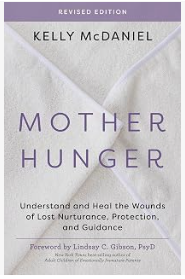
Mother Hunger
Understanding Trauma & The Path to Recovery
The Insight
In Mother Hunger, Kelly McDaniel explores the profound, persistent ache that adults—particularly daughters—carry when they grow up without the essential developmental pillars every child requires from a maternal figure: nurturing, protection, and guidance. Grounded in attachment theory, McDaniel explains how an early deprivation of emotional attunement and safety leaves a deep somatic and psychological imprint. When a mother is emotionally absent, critical, or incapable of protecting her child from terror and chaos, the developing nervous system adapts by building an impenetrable fortress around the heart. Deprived of the external regulation needed to soothe distress, adults with Mother Hunger often struggle with chronic hypervigilance, insecure attachment styles, self-blame, and a desperate, unconscious compulsion to seek out familiar, exploitative dynamics that mimic their earliest relational wounds. Healing begins by naming this structural injury rather than mislabeling it as a personal flaw, allowing the survivor to unfreeze suppressed grief and cultivate a nurturing inner sanctuary.
The Mending
Reading McDaniel’s work feels like shining a glaring, compassionate light into the darkest corners of my own origins. From my earliest days of colicky infancy, marked by my mother's frozen abandonment and emotional absence, I was imprinted with a devastating foundational message: I am not valuable, I am not protected, and I am entirely on my own. Because my mother offered conditional approval and demanded performance while leaving me undefended against domestic instability and terror, I encased my heart in stone, becoming an over-functioning, fiercely independent child who learned that love had to be painfully earned through utility and service. In the pages of Holy Facade, I trace how this profound maternal deprivation directly paved the way for my decades-long entrapment in faith-based narcissistic abuse. I spent a lifetime desperately seeking outside of myself the nurturing and validation I never received at home, mistaking control for safety and emotional starvation for love. Recognizing Mother Hunger has finally liberated me from the false narrative that I was somehow inherently broken or to blame. By tending to my wounded inner child and learning to self-soothe with genuine compassion rather than performance, I am replacing inherited shame with enduring resilience, reclaiming my voice, and building a life rooted in authentic safety and unshakeable self-worth.
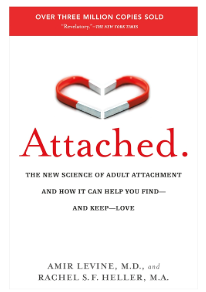
Attached.
Understanding Trauma & The Path to Recovery
The Insight
In Attached, Amir Levine and Rachel S.F. Heller examine adult attachment styles—anxious, avoidant, and secure—and explain how our early relational blueprints dictate our behavior in romantic partnerships. The authors highlight how individuals with an anxious attachment style often experience intense fears of abandonment, hyper-activate when sensing emotional distance, and rely on protest behaviors or urgent attempts to secure closeness to calm their nervous systems. Conversely, those with an avoidant attachment style use distancing strategies to maintain independence and manage vulnerability. Levine and Heller emphasize that true relational health requires recognizing these innate wiring patterns, moving past shame, and developing effective communication to build secure bonds with partners who are emotionally available and responsive.
The Mending
My journey through decades of feeling invisible and abandoned deeply mirrored the anxious attachment patterns described in Attached. Surviving early infancy neglect left me with a profound, internal conviction that I was unlovable and fundamentally alone, making my adult marriage a frantic, exhausting mission to secure safety and prove my worth. I continually engaged in protest behaviors—over-adapting, suppressing my own needs, and enduring deep emotional distress—just to maintain a fragile illusion of connection with a partner who was emotionally unavailable. Recognizing these behaviors through Attached allowed me to replace the heavy burden of self-blame with deep compassion. I understand now that my hyper-vigilance and desperate striving were not personal failures, but adaptive survival mechanisms forged in childhood. Breaking free from that cycle has allowed me to rewrite my relational blueprint, transforming old patterns into enduring resilience and reclaiming a grounded, peaceful sense of self.