
The Insight
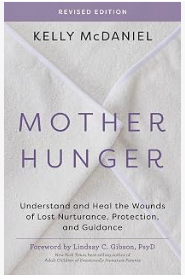
In Mother Hunger, Kelly McDaniel explores the profound, persistent ache that adults—particularly daughters—carry when they grow up without the essential developmental pillars every child requires from a maternal figure: nurturing, protection, and guidance. Grounded in attachment theory, McDaniel explains how an early deprivation of emotional attunement and safety leaves a deep somatic and psychological imprint. When a mother is emotionally absent, critical, or incapable of protecting her child from terror and chaos, the developing nervous system adapts by building an impenetrable fortress around the heart. Deprived of the external regulation needed to soothe distress, adults with Mother Hunger often struggle with chronic hypervigilance, insecure attachment styles, self-blame, and a desperate, unconscious compulsion to seek out familiar, exploitative dynamics that mimic their earliest relational wounds. Healing begins by naming this structural injury rather than mislabeling it as a personal flaw, allowing the survivor to unfreeze suppressed grief and cultivate a nurturing inner sanctuary.
The Mending
Reading McDaniel’s work feels like shining a glaring, compassionate light into the darkest corners of my own origins. From my earliest days of colicky infancy, marked by my mother's frozen abandonment and emotional absence, I was imprinted with a devastating foundational message: I am not valuable, I am not protected, and I am entirely on my own. Because my mother offered conditional approval and demanded performance while leaving me undefended against domestic instability and terror, I encased my heart in stone, becoming an over-functioning, fiercely independent child who learned that love had to be painfully earned through utility and service. In the pages of Holy Facade, I trace how this profound maternal deprivation directly paved the way for my decades-long entrapment in faith-based narcissistic abuse. I spent a lifetime desperately seeking outside of myself the nurturing and validation I never received at home, mistaking control for safety and emotional starvation for love. Recognizing Mother Hunger has finally liberated me from the false narrative that I was somehow inherently broken or to blame. By tending to my wounded inner child and learning to self-soothe with genuine compassion rather than performance, I am replacing inherited shame with enduring resilience, reclaiming my voice, and building a life rooted in authentic safety and unshakeable self-worth.